
Positronic Space Connectors

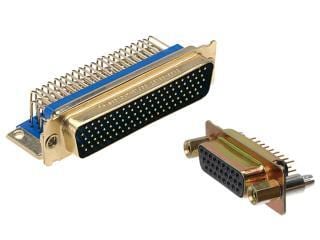


Not just anyone or anything can make it into space these days. Space travel is expensive, exclusive, and highly selective, so when the space industry requests space connectors to assist their electronic equipment, only the best products make the grade. Ideally, space connectors are not only efficient at their job, they are also capable of standing up to harsh environmental conditions, being reliable and long-lasting (because repair is typically impossible once you’ve left the earth’s surface), and still remain unimposing (so that it won’t disturb the other equipment on board).
The list of requirements is long, but the job is an important one. Space connectors must satisfy all these demands if they wish to catch that rocket to the moon.
Space Connectors Defined
Space connectorsSpace connectors are utilized within the electronic equipment used in space applications, whether on a spacecraft or a satellite.
To qualify for this elite task, the connectors must be tested and approved by NASA or the European Space Agency (or the space agency of whatever country they will be representing). Like all devices used in space, they have to meet stringent testing for outgassing (the release of trapped air) and residual magnetism (which can interfere with other mechanisms) to be suitable for use in space applications.
Outgassing and residual magnetism can adversely affect nearby components. NASA and the ESA have similar requirements, though sometimes they vary for a particular mission.
Due to their unique mission, space connectors have special requirements to satisfy in regard to their shape, size, and materiality (not unlike military connectors).
Space connectors must be compact, first of all, because there is only so much room on a space vehicle. Weight is another major consideration. Costs to launch a payload into space is directly related to the weight of that payload so lightweight connectors are desirable. But space connectors can’t just be small and lightweight, they have to be extremely reliable as well and they must be able to withstand severe environmental conditions like shock, extreme temperatures and vibration.
The material the connector is made out of is especially important for space connectors because of the emphasis on low levels of residual magnetism and outgassing. Many manufacturers create their connectors out of elastomers and plastics. Some of these materials contain compounds that may outgas over time, so component suppliers often have these compounds removed during the manufacturing process (usually through a bake-out process).
These serve as just some of the interconnect solutions offered by Positronic. To view our full Positronic offerings CLICK HERE


